The Healthiest Hour Is The Most Uncomfortable
It's not just Recovery, its training
We spend a lot of time trying to make life more comfortable.
Air conditioning. Heated seats. Food delivered to our doors. Elevators instead of stairs. A device in our pocket that can entertain us the second we're bored.
Comfort isn't necessarily a bad thing, it’s in our nature. Our bodies were built to be challenged, and to adapt to those challenges. When we adapt to those challenges, we’re more comfortable. It’s in our nature to chase comfort. Think about exercise. We intentionally lift something heavy, run until our heart is pounding, or push through the final few reps because we understand something important:
Stress—when appropriately dosed—is how we adapt. Over time, we become more comfortable at the level of stress that was dosed such as a distance run or a weight lifted. It becomes easy.
So what if we started thinking about sauna and cold exposure the same way? Not simply as recovery, but as training.
We are living in a world where it is more comfortable than ever. However, we dare to ask, has this comfort cost us? For a lot of us, if our Amazon package isn’t next day it’s disappointing.
An hour at The Studio isn't necessarily an hour of escaping stress. It's an opportunity to intentionally choose it.
Heat challenges your body's ability to regulate temperature. Cold challenges you in an entirely different way. The kind of gut-punch stress you must face head on. Both ask you to remain calm when your environment becomes uncomfortable.
And then you recover.
That cycle—stress, adaptation, recovery—is one of the fundamental ways our bodies become more resilient.
What are some ways to practice staying calm under the stress of the heat and cold? Well, your body will naturally adapt to the amount of stress you put on it. This will happen on its own with no intention, however,
with intention it becomes a whole new ballgame. Simply put, sitting in the sauna and getting in the cold is working without even thinking about it. Add some intention to your time, and it becomes a training session, and can have massive benefits that transfer over into your everyday life.
So let's talk about intention, because simply the right mindset can set the whole tone for anything. Intention prepares you. Intention sees you through. Your mindset is your reality, and how you choose to think is extremely important in anything you do. Your mind believes what you tell it. That’s why mantras (repeating a phrase over and over) are a thing for many people who practice meditation. Going into a session, a round of sauna, or a cold plunge with the intention of thriving under the stress can have huge benefits. A focused person is a powerful person, and however you set that focus and intention can be done different ways and entirely up to you. Remember, it’s not just surviving, it’s THRIVING!
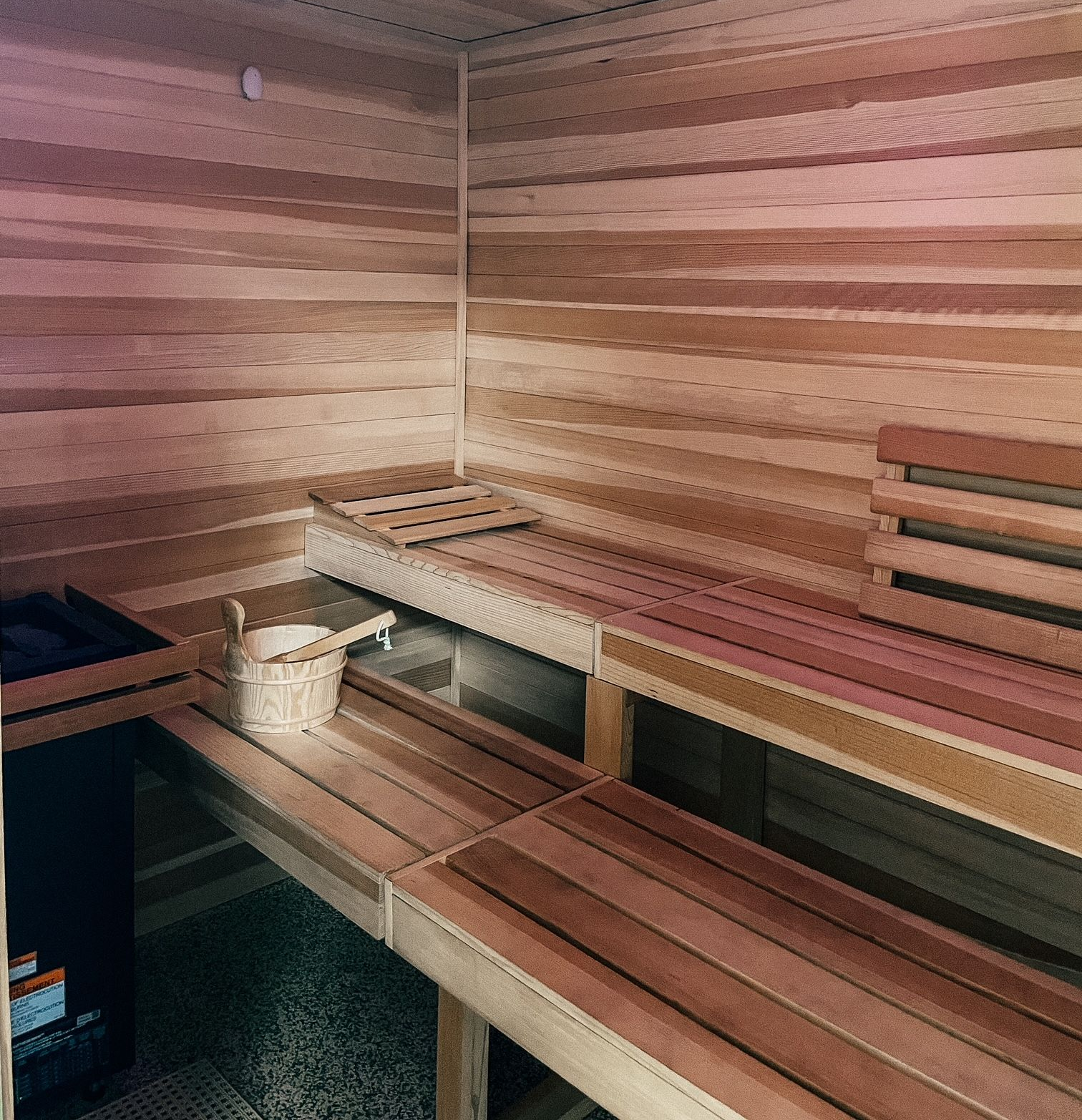
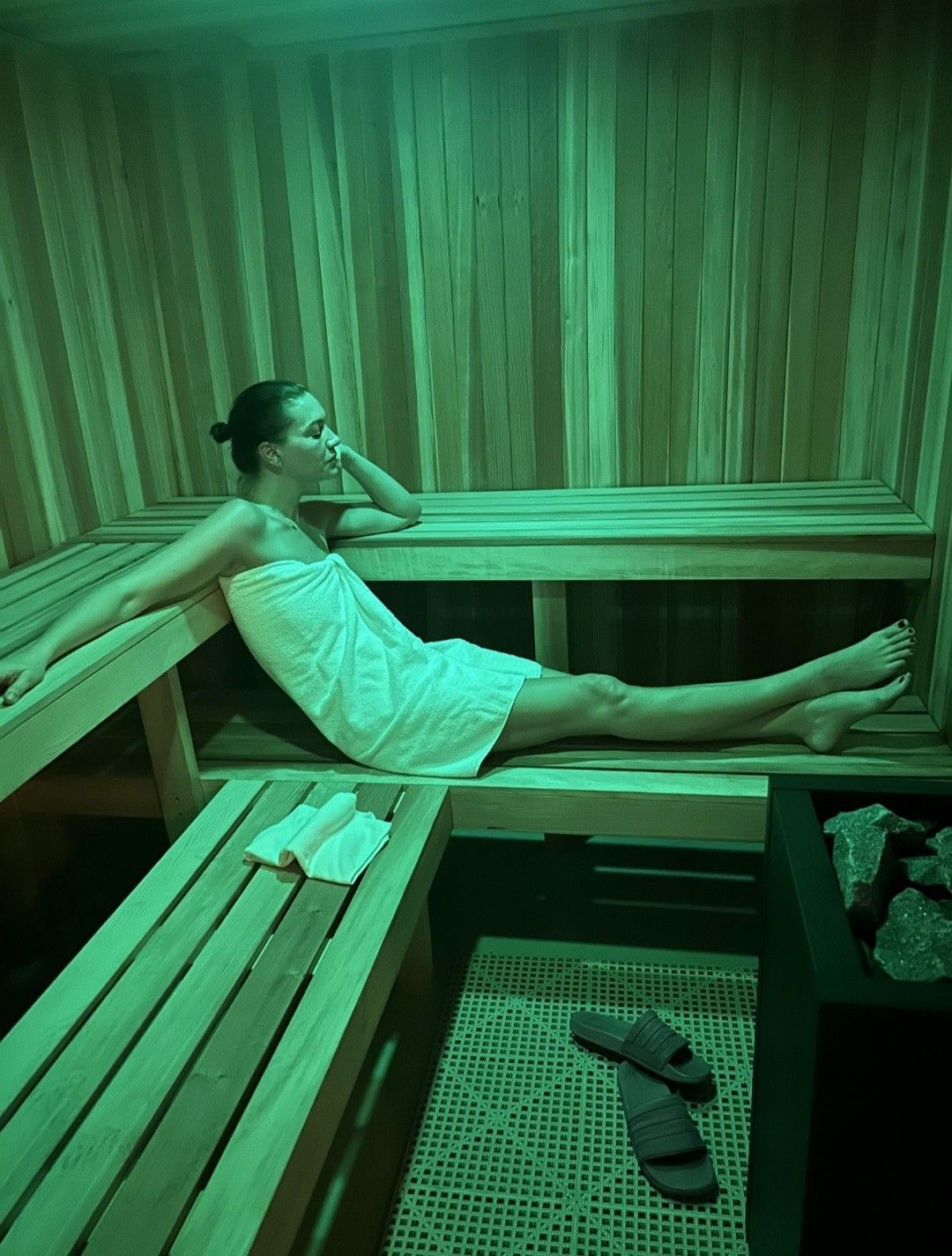
In the heat, staying calmer for longer is a great intention. The first 10 minutes or so can be relatively easy. Somewhere around that time for most, you start noticing the elevated heart rate, respiration picks up, stress starts to hit. The beads of sweat get more noticeable, almost annoying. You check the clock. If you are aiming for 15-20 minutes, the remaining time can feel like an eternity, as if the clock is moving backward. If you can be aware enough when the stress really kicks in, combating it with intention can not only keep that clock moving, it can train your stress response to adapt quicker and more efficiently. This takes practice, but is totally attainable. A favorite of ours is humming. Yes, humming. The vibration from humming stimulates your vagus nerve, which controls the sympathetic nervous system and acts to return your body to homeostasis during stress. Close your eyes. Deep breath in. Long extended exhale while humming like a little bumblebee. Ok, a badass bumblebee if that suits you better ;). Another favorite of ours to keep calm in the heat when you start to hit that wall is the “box breath”. Many special forces units are taught the box-breath to keep their heart rate down during stressful situations making them better able to perform under pressure. The box-breath looks something like this: Close your eyes and inhale for 3 seconds for beginners, 4-5 for those more experienced…everyone is different so if you're new to this start with 3 and see how you feel. After the inhale, hold for that same amount of time, exhale for that amount of time, then hold again until the next exhale. If you’re using a 4 second cadence: inhale 4 seconds, hold 4 seconds, exhale 4 seconds, hold 4 seconds. Use this method when you start feeling uncomfortable and let the magic happen!
Keeping calm in the cold is very similar, it is all in the breath, and starts with an intention. Something such as, “I can do hard things”, can be a game changer. Find a mantra that works for you. Whereas the sauna is more of a war of attrition against the stress, the cold can punch you square in the mouth. Getting in is the most stressful part for pretty much everyone, so here’s where we need to focus. I like to play a game to see if I can get in and stay in without it changing my breath or physical response. Getting in and staying in as calm as possible is the practice I have found most challenging in my time cold plunging. I like to imagine that if someone was watching they wouldn’t be able to tell if i was getting into 40 degree water or 98 degree water. I have noticed keeping this in mind has really helped me to be calmer and more aware throughout the day. The cold can take your breath away, and if we’ve helped you through your first one you know we preach the exhale. Express repeated, long exhales upon entry because the cold does the inhale for you. IYKYK. Here, humming also helps stimulate the vagus nerve similar to what we discussed during our discussion on sauna stress.
Life’s stresses are everywhere, don’t announce themselves, and are just plain unavoidable. The more comfortable we make our lives, the harder the stresses hit. Sauna and cold plunge, the act of deliberately choosing stress, can train your response to life. Training to recover is quite a paradox, which is one of our favorite things about contrast therapy.
Stay cool, everyone, and thanks for reading this month!